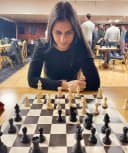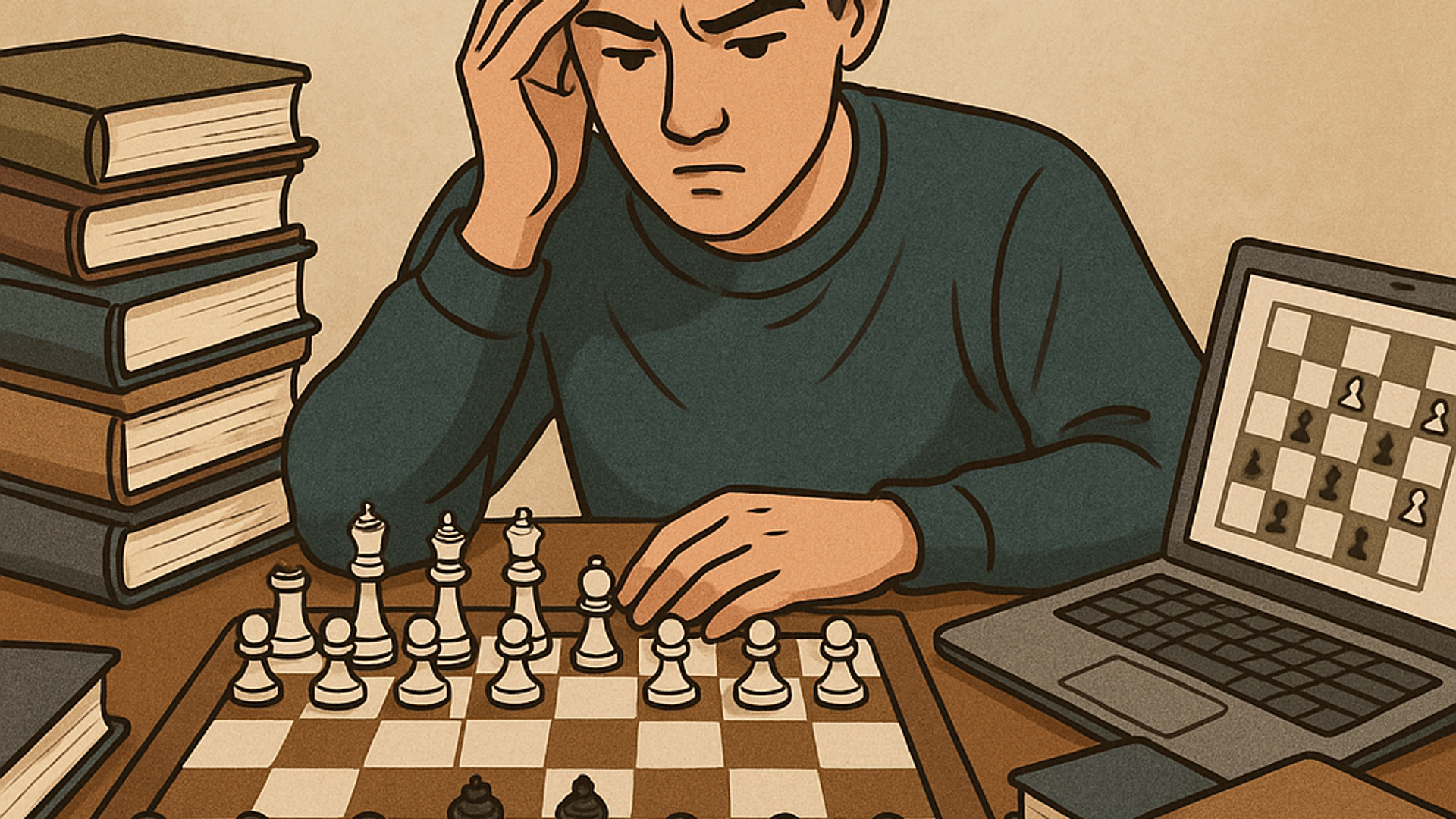
It’s a question many people ask before starting:
Can chess be self-taught?
The short answer is yes.
You can absolutely learn chess from books, YouTube videos, online platforms, and playing games on your own. Many players begin this way. You can learn the rules, basic principles, common openings, and even some tactical patterns.
However, the real question is not whether chess can be self-taught.
It’s whether self-teaching leads to complete development.
Learning Principles vs Understanding the Game
Books and videos usually teach general rules:
• Control the centre
• Develop your pieces
• The bishop pair is often stronger
• Don’t move the same piece twice in the opening
These are helpful. But they are only the surface.
True understanding of chess goes beyond memorising rules. It is the ability to make good decisions consistently — even when the position is unclear.
Chess is not only about theory. It is about:
• pattern recognition
• problem-solving
• prioritising what matters in a position
• knowing when general rules apply — and when they don’t
For example, many books teach that the bishop pair is stronger than knights. That is often true. But experienced players understand that there are many positions where knights are superior. Without deeper guidance, it can be difficult to understand why.
This nuance is rarely fully absorbed through passive learning alone.
The Hidden Risk of Self-Teaching
The danger of learning chess entirely alone is not that you will fail. It is that you may develop unnoticed gaps.
Two players with the same rating - for example, 1000- can have completely different weaknesses. One may struggle with calculation. Another may struggle with positional planning. A third may have emotional decision-making issues.
Books and general videos cannot identify your specific patterns.
A chess tutor or chess coach can.
Improvement in chess depends heavily on recognising why you make mistakes. Not just what move was wrong — but why you chose it.
Was it impulsivity?
Fear of risk?
Overconfidence in an attack?
Poor evaluation of the position?
Understanding your decision patterns is the key to long-term growth.
Chess Is a Game of Decisions
Every move in chess is a decision.
And decisions are influenced by more than knowledge. They are shaped by experience, judgement, and psychological tendencies.
This is why structured chess lessons often accelerate improvement. A skilled chess instructor does more than teach moves. They analyse your thinking process and help refine it.
Without that feedback, players often repeat the same mistakes for years without realising it.
So, Can You Teach Yourself Chess?
Yes.
You can learn the fundamentals. You can become competent. You can even become strong.
But if your goal is deeper understanding, fewer recurring mistakes, and structured improvement, guided chess coaching provides something self-study cannot: personalised correction and strategic direction.
Chess is not simply about knowing moves from a book. It is about understanding what a position demands - and training your judgement accordingly.
Whether you choose independent study or work with a chess coach, what ultimately matters is deliberate, thoughtful learning.